Wednesday, June 26, 2013

Bethpage Black


I played two rounds on back-to-back days on the Black course at Bethpage State Park. The course was built in 1936 by A.W. Tillinghast and, since its inception, it has hosted two U.S. Open Championships (2002, 2009) among a slew of other tournaments. Tillinghast built the course to compete with its fellow northeast neighbors (read Pine Valley and Winged Foot), and he certainly succeeded.
I played both windy rounds from the tips, measuring a long 7,400 yards. I can comfortably say that Bethpage Black is the hardest course I have ever played. Although the course was extremely difficult, it was enjoyable, and the design was fair. This quote from Golf Club Atlas sums it up well:

“Some modern courses lose a sense of continuity in their quest for difficulty. Such modern courses feel fragmented, as you go from one impossible hole to the next. One of the lasting appeals of Bethpage is that the holes seem to be effortlessly cut from the same fabric, with one sound hole following another.“

Two themes seen from A.W. Tillinghast throughout the round are a premium on driving and superb course bunkering. Keep an eye out for these two things in the pictures of the course.

The course really begins to take off on the second hole. The tee shot, seen in the picture above, requires a right to left ball flight followed by an uphill approach to an elevated green. A 3 wood or hybrid off the tee is the play. At 389 yards, it is the shortest par 4 on the course. Anything in the rough, anywhere on the course, was dead.
The third hole is the first real taste of Tillinghast's amazing bunkering. The 230 yard par 3 has a large green that moves away and left from the player. A back left pin placement creates an unbelievably tough approach over the bunkers. 
View from 4th tee
Approach to heavily bunkered 4th green
The par 5 4th hole is the course's signature hole. The bunkering is extremely intimidating from the tee. Tillinghast is quoted as saying that the 4th hole is the best three shot par 5 in golf. The heavily bunkered green slopes away from the players, shrugging off any poorly struck approach shots. 
The 5th hole is one of multiple on the course with a large diagonal bunker running across the fairway. The golfer can cut off as much as he wants to shorten the hole. Approaching from the right side of the fairway is optimal. The hole requires a cut off the tee and a draw into the elevated green. 
The downhill approach to the 6th is one of the most picturesque on the course.
The par 5 7th is another hole with a diagonal bunker guarding one side of the fairway. Cutting off a large portion of the bunker results in a shorter second shot into the hole, but land in the bunker, and you're looking at bogey or worse. Classic risk and reward. 
The downhill par 3 8th measured 210 yards and is yet another stunning hole. The slope in front of the green is alarmingly steep. Any shot short will run back into the water. 
The collection of gorgeous par 3s continues with the 14th hole. Distance control is key with the approach to this green. The bunker short right is over ten feet deep. The tee shot can vary by nearly 40 yards depending on the pin position on this green.
 The 15th hole is the number one handicap hole on the course. It is paramount to hit the fairway on this hole! A huge drive still leaves an uphill 145-165 yard approach to a heavily bunkered and sloping green. The 15th was one of my favorite holes on the course.
The 16th is yet another extremely strong par 3. It requires a 205 yard shot into a very shallow green. The pin was far left during our first round and far right during our second round... I hit it into the front bunker both rounds...
The 18th caps off a round that required nothing but pinpoint accuracy off the tee. The fairway narrows in the landing area and leaves a manageable 100-130 yard approach to a heavily bunkered, but large, elevated green. You let out of sigh of exhaustion and relief walking off the 18th green at Bethpage. 

The course was in extremely good condition. The greens, fairways, and rough were all very lush and carpet smooth; however, most of the bunkers were unraked and I ended up fixing 4-5 pitch marks on each green. Unfortunately, that is the nature of the beast with public golf courses receiving hundreds of rounds per day. The greens crew does a spectacular job with the course.
I greatly enjoyed my rounds at Bethpage Black. In addition to Pine Valley, this was one of the only rounds where I couldn't think of a weak hole on the course. I walked off the course exhausted each day. It gave me a huge appreciation for what the pros experience during a US Open at Bethpage. I was playing a less penal course setup, but each mistake during the round was deadly to a score and any weak aspect of a golfer's game is immediately exposed. Simply having the stamina to play four competitive rounds from the tips at a monster of a course like Bethpage is a feat in itself.

Friday, June 7, 2013

Biltmore Forest Country Club (Pictures)

My original post on Biltmore Forest Country Club, available here, did not have nearly enough photos of the golf course. I recently went out to the course and took a number of photos to accompany blog post. Have a read of the original post and enjoy these new pictures! I will continue to add more extensive photos of the back 9 over the coming days.
Putting green 
View down hole #1
Approach shot into #1 green

View from the elevated tee box on the dogleg right 2nd hole
Approach shot on hole #2
Par 3 3rd hole
6th hole tee shot working uphill and to the left
Severely sloping 6th green looking back down fairway
Tee shot on par 5 7th hole with large gully landing area
Par 3 9th hole with clubhouse on the right
Approach shot on the short par 4 11th hole 
The 12th green looking back over the 10th and 11th holes 
220 yard par 3 15th hole
18th green looking back down the fairway

Monday, May 20, 2013

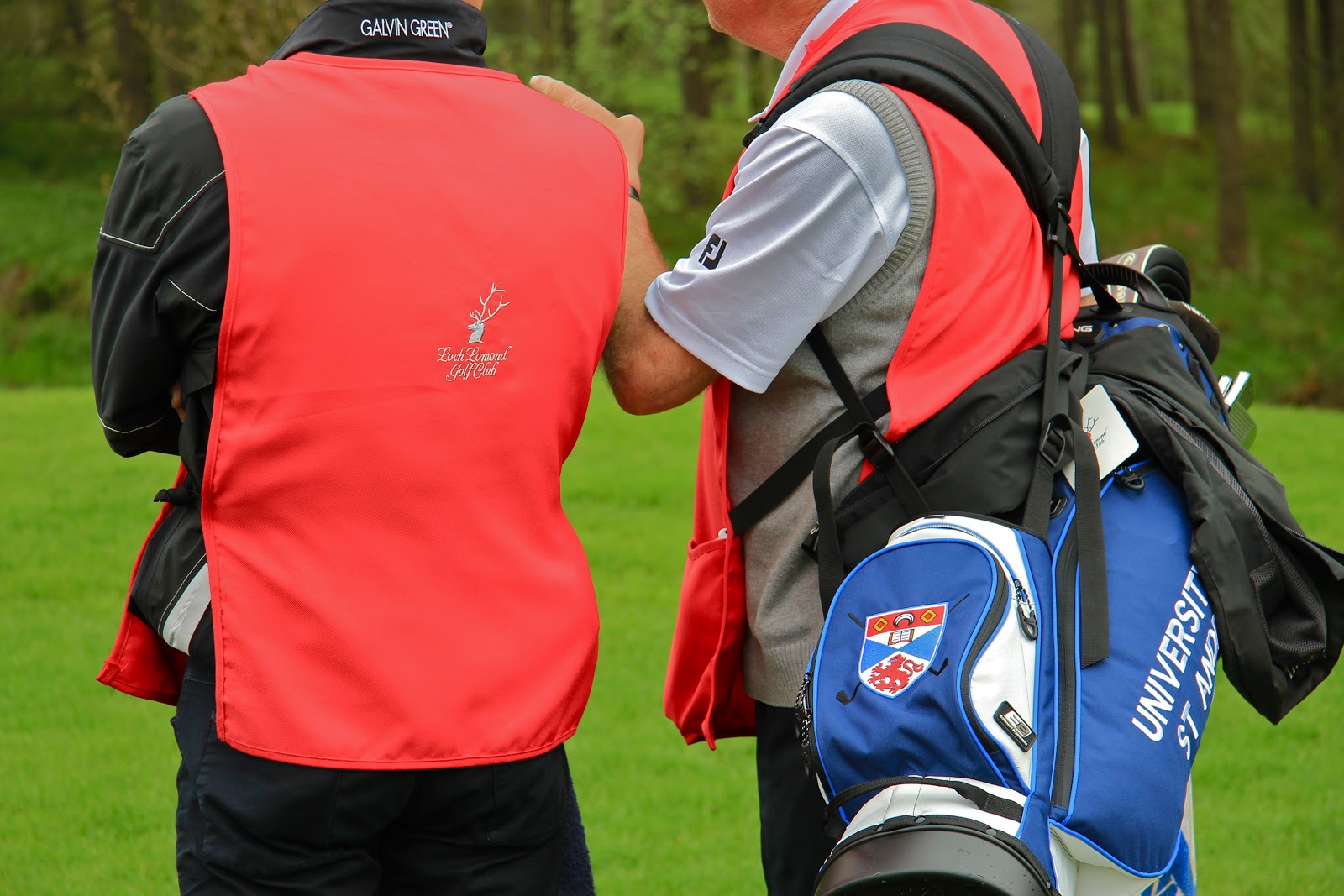
Loch Lomond Golf Club


Loch Lomond Golf Club proved to be one of the most enjoyable and memorable experiences that I have had at a golf club. The level of luxury and service rivals any top club in the world. Loch Lomond is arguably the most exclusive golf club in the UK, and it proved extremely difficult to arrange a round. After two and a half years of trying to get on, I gave up, and as these things go, I was randomly approached a few months later with the opportunity to play. What a round it turned out to be!
We pulled through the imposing guarded gates of Loch Lomond Golf Club and made our way around a small bay. Holes 17 and 18 can be seen along your left, as well as a sight of the club’s large yacht, which is available to members to use on the 25 mile long Loch Lomond. The picture is framed by a beautiful view of Ben Lomond in the background. Once rounding the bay, the imposing Rossdhu Mansion comes into breathtaking view. The stunning manor house, built in 1773, serves as one of the world’s most luxurious clubhouses.
We met our host member in front of the clubhouse and made our way to the tastefully understated, yet amenity filled, gorgeous locker room. A visit to the pro-shop and a chat with the pro told us that we were one of only four groups out that day, and we would have the course to ourselves. A beautiful lunch and drinks set the scene before heading out to the range and teeing off. The exclusivity and lore surrounding Loch Lomond leads one to expect a stuffy and “up-tight” experience behind the gates, but reality is the polar opposite. Everything was incredibly relaxed. Staff and members were equally friendly, and everyone seemed to be great friends sharing jokes and stories and enjoying each other's company during our visit.
The Tom Weiskopf and Jay Morrish designed course is currently ranked #73 in the World. The views of both Loch Lomond and the surrounding hills are breathtaking. Unfortunately, during our visit there was low lying cloud cover, but the temperature and weather were otherwise excellent. Hopefully, another visit to the club can happen when it is nice and sunny!
The approach to the 1st green (pictured above) sets the tone for the course. The tee shot works uphill and to the left, demanding a well placed tee shot on the right-hand side of the fairway. Heavily bunkered, but fair, green complexes were to be found the entire round, with thick lush rough punishing any wayward balls.
The 3rd is a dogleg left par 5 working out towards the loch. The tee shot demands a big ball to carry the bunker guarding the corner, and trees short right of the green put a premium on well placed layup shots.  A small body of water short right of the green deters people going for the green. It is an excellently designed hole.
The par 3 5th measures 175 yards with a gorgeous view of the loch and hills (in the clouds) framing the green. It is another example of a very fair, well designed green complex that punishes poorly struck tee shots. The green is considerably deeper than it appears off the tee.
The 6th hole is a 580 yard par 5 and is the number one stroke index hole. This picture was taken from 255 yards out in the left rough, and shows the beautiful bunkering on the second half of the hole. The loch sits ominously close on the right side of the hole, and everyone in our group subconsciously aimed or pulled their shots left trying to avoid the water.
Number 8 is a par 3 directly in front of the clubhouse. It is a fair 160 yard hole with a frightening amount of bunkers distracting golfers from the primary objective - hitting the green. After having called in your food and drink orders using the club phone hidden in a tree off the 7th tee, Loch Lomond staff meet you off the edge of this green with food, drinks, and cigars. The staff seemed to always know where our group was on the grounds, and anticipated our needs and desires. For instance, upon finishing the rounds, our normal shoes had been polished, our golf shoes were taken to be cleaned and polished, and our car had been valeted from the off-site lot in case we needed anything from the trunk.
The 9th is a short 325 yard hole, whose main defense is a wickedly small and well bunkered green. A hybrid off the tee left just under 100 yards to the hole, which was positioned on a thin band of green measuring less than 15 paces wide. 
The 12th hole required a solid drive in order to put a short iron in hand for the approach shot. The green  is very intimidating with a large false front / collection area short right (seen pictured above with the golfer and his caddie). It was one of my favorite holes on the course, and I would love to have stood out in the fairway and hit practice balls into the green all afternoon.
The 14th hole was a reachable 320 yard par 4. Golfers have two options playing the hole. You can hit a hybrid club down the left, or aim directly at the green, hitting over the marsh and burn on the right. Click on the photo to enlarge and see both options off this tee box. Our group saw three birdies and a par on this hole. Three of us playing off 3 handicaps hit the green (unheard of according to caddies), and oddly enough the player who took it down the left side made one of the birdies. 
I was fortunate enough to have an eagle on this 16th hole. It is a 515 yard par 5 and, after hitting a drive down the right side of the dogleg left fairway, I was left with 240 yards into the green protected by a small body of water (pictured above). A solid 3 wood left a make-able 15 foot putt. My caddie was a man named Jim who had been working at the club fourteen years. He was incredibly helpful the entire day, and he read that eagle putt perfectly. He was invaluable during the round and I was grateful to have him on the bag. 
The finishing hole was a dogleg left hugging the contour of the bay. Big hitters could aim at the right edge of the clubhouse to cut off the edge of the loch. The risk was aiming too far left and getting stuck behind the trees (as I did) or, worse, having the slope kick your ball into the water. It is a strong finishing hole, which capped off a course featuring many tough, but very fair, holes of golf.

When our round concluded, staff were waiting off the green to take our clubs and check on our needs. We headed into the bar for drinks and dinner. After a few pints, we placed our dinner orders and headed into the luxurious locker room to have a shower and change clothes. As would be expected, the shower was once of the best I have ever experienced. On the patented PowerShower rating scale, it received an unheard of rating of 9, tying for first place with Prestwick Golf Club’s member locker room showers. The food and atmosphere were second to none, as was the menu and drink list.
The golf at Loch Lomond was extraordinary, but it was the overall experience that will make my visit to the club so memorable. I have to thank our host member for his incredible generosity, good golf, and good chat throughout the day. The sense of occasion surrounding the round will not be matched any time soon!

Monday, April 29, 2013

St Andrews Castle Course

The St Andrews Castle Course draws mixed reactions from those who have played the course. David Kidd designed the Castle, which opened in 2008. The course is set just outside of St Andrews, a short eight-minute drive south down the coast towards Crail.
The views at the course are second to none. The sea is visible from nearly every hole, and certain holes bordering the cliffs are literally breathtaking.
My main point of contention with the Castle Course is its greens. Since the course was built, the greens have been “redesigned” (read flattened) four times. Even with all the tempering, the greens are still extreme. The severity of the slopes limit pin placements, and during strong winds, certain greens border unplayable.
The crazy greens begin on the 2nd hole where, depending on the wind, approach shots can vary between 130-200 yards. The green has a massive false front, a large valley running through the middle, and severely slopes falling off the back into tall grass. It is simply unfair. The pin placement pictured is one of the few accessible pins. Aiming center of the green and hoping to end up in the valley is a player's best option. 
The two photos above are of the par 3 3rd hole. The lower photo is of the collection area behind the green. It is a two level green, with a large false front and a large collection area behind the green. The hole is 179 yards from the standard tees and the prevailing wind is behind the player. If the wind is even slightly strong, it becomes close to impossible to hold this green. 
The 4th and 5th holes are both par 5s at the Castle Course and both have horrendously difficult greens. The green pictured above is the fifth. The slopes are so severe and numerous that there are roughly only three usable pin positions depending on green speeds.
The 11th hole is an uphill par 4 to yet another sloping green. If the greens are running fast, there are only two useable pin positions, one of which is where the pin is placed in this photo. A large slope on the back of the green acts as a very useful backstop. A large false front forces any short approach shots thirty yards backwards off the front of the green. 
I consider the 12th hole to be the hardest hole on the golf course. From the medal tees, the hole plays 454 yards uphill with a prevailing headwind. The picture above shows the uphill approach shot to the green. Thankfully, Kidd had the sense to make this green large and not unreasonably difficult. The card shows the hole as stroke index 8 - very debatable....
The approach to the 16th hole can be intimidating. The green contains a valley and features yet another massive false front. Anything short of the pin runs back into the massive valley in front of the green. As is the theme with many of the Castle greens, aim for the center of the green and settle for the 25 foot putt.
The 17th hole at the Castle Course is the signature hole. It is a 174 yard par four over a large gully. At high tide the waves are crashing below the tee. The view is breathtaking! It is one of my favorite par 3s in the World. A large slope left of the green feeds balls down to the pin. Smart players utilize this slope depending on the pin placement. 
The 18th is a dogleg right par 5 with a massive shared double green. It is a compelling final view. The green is difficult, but fair. The approach shot into the tough green requires distance control and accuracy - something that should be found on a risk/reward par 5.

You may have seen a theme in this blog post of tremendously difficult greens and massive false fronts. Now, think on the topic again factoring in that the greens have been tempered and flattened four times since they were built. I would recommend playing the Castle Course to anyone visiting St Andrews, but leave the scorecard in the bag and keep the camera out.